

Being undecided is common, and it does not have to cost you time or money. About 30% of first-time undergraduates change their declared major at least once within three years, and most schools let you wait until the end of sophomore year to declare. The move this month: enroll in general education courses plus two introductory classes in fields that interest you, and book a meeting with an academic advisor.
TL;DR:
- Most students change their majors after starting college, with around 30% doing so within three years, emphasizing the normalcy of exploration.
- Engaging in a structured exploration plan, including coursework, advisor meetings, and internships, helps avoid delays and extra costs during major transitions.
- Formal campus programs for undecided students group interests into clusters, provide specialized advisors, and recommend deadlines for declaring majors.
- Focusing on course mapping, prerequisites, and credit transfer early prevents missed requirements and potential year-long delays in graduation.
- Using assessment tools and informational interviews enhances understanding of interests and aptitudes, leading to more informed major choices.
Table of Contents
- Why being undecided can be a strategic advantage
- How exploratory programs work and what to expect on campus
- Your first-year, step-by-step exploration plan
- How to avoid extra semesters, missed prerequisites, and surprise costs
- Tools and resources to narrow your options
- How Univyze keeps this plan from falling apart
- A brief perspective: normalize exploration, seek help early
- Plan your path with a Univyze waitlist spot
- FAQ
- Sources
Why being undecided can be a strategic advantage
Treating “undecided” as a problem to fix fast is exactly backward. Students’ interests and sense of fit shift constantly during the first year as they encounter new subjects, professors, and peers, so locking in a major before that process plays out often means locking in the wrong one. Roughly 30% of undergraduates change majors within three years of enrolling, which means changing once is closer to normal than exceptional.

The real risk is not being undecided. It’s exploring without a structure, which is what turns a reasonable pause into a semester you did not plan for.
A few things worth remembering as you start:
- Many successful students entered college undeclared and used their first year to test ideas before committing.
- One change of major is common; it’s late, unplanned changes that tend to cost extra time.
- Exploration works best when it has a deadline attached to it, not when it’s left open-ended.
How exploratory programs work and what to expect on campus
Most campuses have a formal structure for students who have not chosen a major, often called an exploratory, undeclared, or “meta-major” program. These programs assign you a dedicated advisor trained specifically in helping undecided students compare fields, and they group broad academic interests into clusters so you can test a general direction before narrowing to a specific major.
Before you dive into coursework, check three things with your registrar or admissions office: the official declaration deadline, whether any majors you’re curious about have restricted or selective admission, and whether your exploratory advisor differs from your eventual major advisor.
Then put these campus resources to work in your first term:
- Meet your assigned exploratory advisor and ask what meta-major clusters fit your interests.
- Attend a major or career night, where departments present what their programs actually involve day to day.
- Ask for sample four-year course paths for two or three majors you’re weighing.
- Sit in on a workshop covering how general education requirements map across different degrees.
Your first-year, step-by-step exploration plan
Exploration without a timeline tends to drift. A semester-by-semester structure keeps you moving while you figure out where you fit.
- Month one: Take a career interest inventory, meet with your advisor, and download degree maps for two or three majors you’re considering.
- First semester: Schedule one general education course, two introductory courses in candidate fields, and one wildcard class outside your usual interests. Keep a short journal noting what engaged you and what felt like a chore.
- Between semesters: Line up one or two informational interviews, join a club tied to a field you’re curious about, and ask a professor if you can sit in on an upper-level class.
- Second semester: Repeat targeted introductory courses in your strongest candidates, check prerequisite chains for any majors with selective admission, and sketch out what a timeline to graduation looks like for each option.
- Decision checkpoint: Aim to declare by the end of sophomore year. If you do switch, run a quick credit-double-count check: which completed courses satisfy requirements in the new major so you lose as little ground as possible.
Pro Tip: Keep a running list of every course that could count toward more than one major. It turns switching from a setback into a minor course correction.
Our freshman year course planning checklist walks through this same sequence in more detail, and our guide on choosing a major as a freshman covers how to weigh candidate fields against each other.

How to avoid extra semesters, missed prerequisites, and surprise costs
Selective-admission majors are where undecided plans most often go wrong. Many competitive programs, engineering and nursing among them, require specific prerequisite courses completed by a certain term, and missing that window can push your entry into the major, and your graduation, back by a full year. NCES research on STEM pathways links early course preparation directly to whether students stay in demanding fields or get pushed out by missed sequencing.
A few tactics keep this from happening to you:
- Pull the official degree map for any major you’re seriously considering before you register for next semester.
- Prioritize courses that count toward general education and at least one candidate major at the same time.
- Use summer sessions to catch up on a prerequisite rather than stretching your fall or spring schedule thin.
- Confirm how your AP scores or transfer credits apply as early as possible, since assumptions here are a common source of lost time.
A quick way to see the stakes: about 30% of students change majors within three years, and the ones who do it earlier, with prerequisites already in place, tend to absorb the change without adding a semester.
Tools and resources to narrow your options
Interest alone will not tell you whether a major is right for you. Pairing a structured assessment with real exposure to the field gives you a clearer answer, and Research frames this as weighing interest, aptitude, and opportunity together rather than picking whichever class felt most fun.
- Try an interest inventory like the Strong Interest Inventory or the O*NET Interest Profiler, and a personality-style assessment such as the 16 Personality Type Test, understanding these point you toward directions, not verdicts.
- A broader personal growth assessment guide can help you compare formats if you want to try more than one.
- Book 20-minute informational interviews with professionals in fields you’re considering, and ask what a typical week actually looks like, not just what the job title suggests.
- Use your campus Career Services office for labor-market data, and reach out to department faculty or alumni through LinkedIn for a first-hand read on a major you’re weighing.
How Univyze keeps this plan from falling apart
Running a plan like this across two semesters means tracking a lot of moving pieces: which courses double-count, which prerequisites are time-sensitive, and how AP or transfer credits actually apply. We built Univyze’s dashboard to map your degree requirements against real course offerings, so you can see exactly where an introductory course or a general education class fits across more than one potential major.
If you’re weighing a switch, our what-if scenario tool lets you test a different major against your completed courses before you commit, accounting for AP credit, dual enrollment, and summer sessions along the way. Parents can follow progress through a shared dashboard too, which keeps everyone working from the same plan instead of guesswork pieced together from memory. See how this applies to a real switch decision in our guide to avoiding an extra semester when changing majors.
A brief perspective: normalize exploration, seek help early
The students who come out of their undecided phase fastest are not the ones who agonize longest. They’re the ones who treat each semester as a small experiment: a class, an interview, a conversation with an advisor, then a decision about what to try next. Changing your mind once you have real evidence is not indecision. It’s the plan working.
— Ryan
Plan your path with a Univyze waitlist spot
Mapping gen-eds, candidate majors, and prerequisite chains by hand is exactly the kind of tracking that eats a free afternoon every week. The dashboard automatically maps requirements, updates your plan when courses are added, and shows how a major switch could impact your timeline before registration.
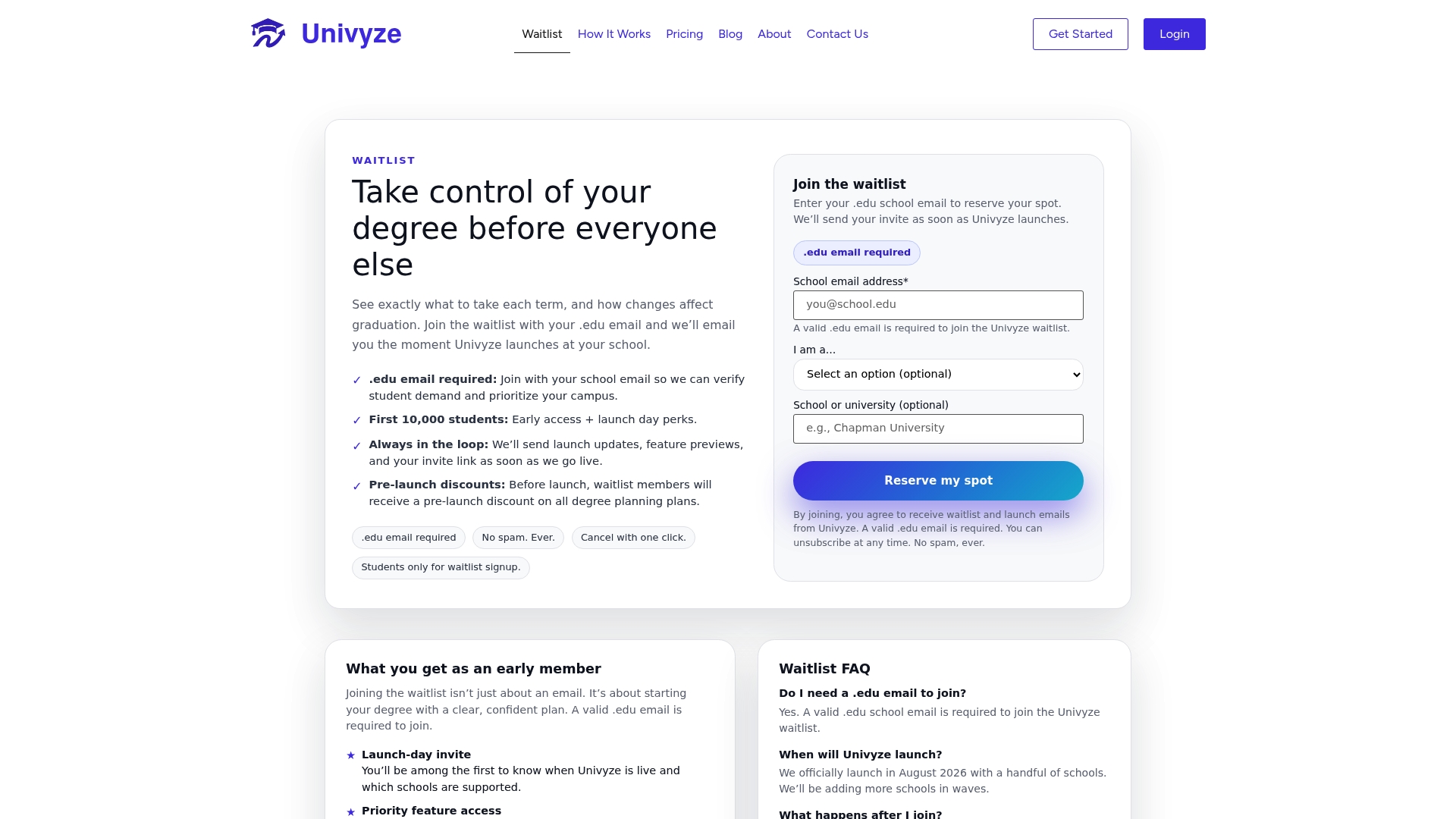
Join the Univyze waitlist to get early access to term-by-term planning, what-if major scenarios, and shared progress tracking for parents, and check plan pricing for details on Starter, Core, Plus, and Pro. Univyze is a planning tool, not a replacement for your official degree audit, so confirm requirements with your university catalog, registrar, and advisor before finalizing any decision.
FAQ
What is a good major if you are undecided?
There is no single “good” major for undecided students. A stronger approach is taking general education courses alongside two or three introductory classes in fields that interest you, then using that direct exposure, rather than guesswork, to narrow your options.
What should you do if your major is undecided?
Enroll in an exploratory or undeclared program if your school offers one, meet with an assigned advisor, and build your first-year schedule around general education requirements plus a few introductory courses in candidate fields. Most schools do not require you to declare until the end of sophomore year, around 60 credits, which gives you time to explore deliberately.
What does an undecided major mean?
An undecided or exploratory major means you have been admitted to college without committing to a specific degree program yet. It is a formal status many schools support with dedicated advising, not a gap in your record, and about 30% of students change their declared major at least once anyway.
What should I major in if I’m not sure?
Start by taking an interest inventory and talking with professionals in two or three fields through informational interviews, then test those fields directly through introductory coursework. The combination of assessment, conversation, and real classroom exposure tends to surface a clearer answer than reflection alone.