

Managing an overloaded semester schedule means regaining control by planning realistically, prioritizing wisely, and studying efficiently. The academic term for this practice is workload management, and it sits at the center of every successful college experience. Students carrying 15 or more credit hours face a real math problem: the standard expectation is 2–3 hours of study per credit hour per week, which means a 15-credit semester demands up to 45 hours of study time on top of class time. That number is not a scare tactic. It is a planning baseline, and ignoring it is where most students run into trouble.
What does realistic planning look like for a heavy semester?
Realistic planning starts with an honest accounting of your time. Most students underestimate how long coursework actually takes because they treat every class the same. That is the first mistake.
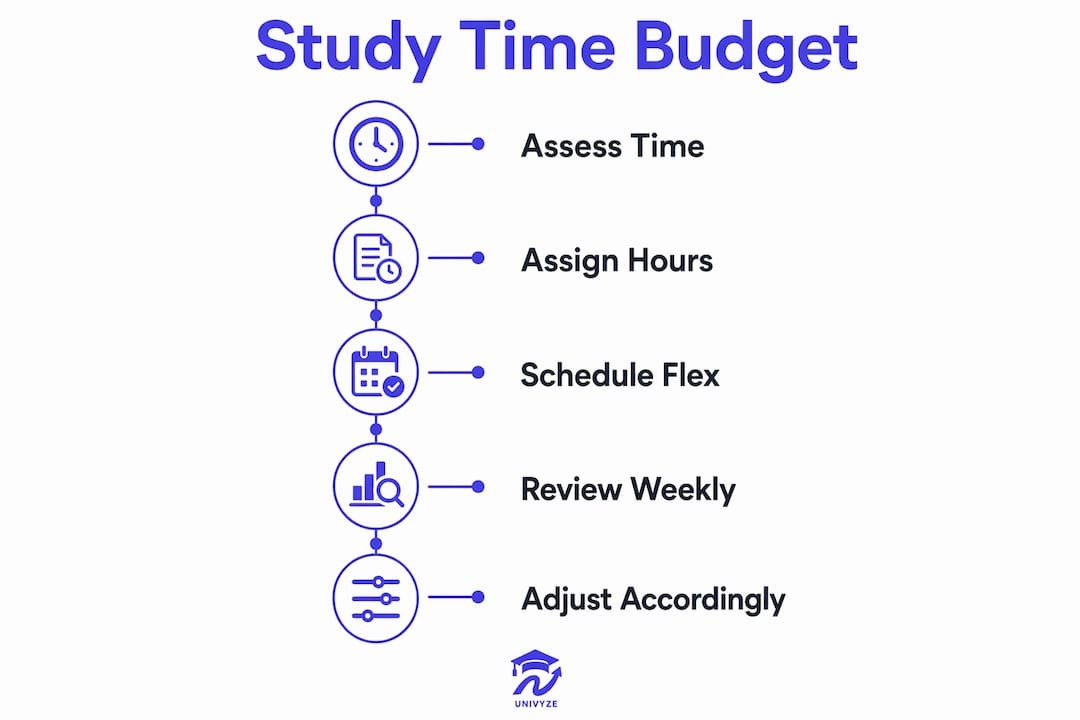
The fix is a variable academic budget. Assign study hours by difficulty: roughly 3 hours per credit for your hardest courses, 2 hours for mid-level courses, and 1 hour for courses where you already have strong background knowledge. This approach reflects reality instead of wishful thinking.

Here is what a 15-credit semester might look like using this method:
| Course | Credits | Difficulty | Weekly Study Hours |
|---|---|---|---|
| Organic Chemistry | 4 | High | 12 |
| Statistics | 3 | High | 9 |
| History Survey | 3 | Medium | 6 |
| Art Elective | 3 | Low | 3 |
| Writing Seminar | 2 | Medium | 4 |
| Total | 15 | 34 hours |
That total is manageable. A flat “3 hours per credit for everything” would push you to 45 hours and burn you out by week four.
Beyond the daily grind, build in structure for the week as a whole. A 30-minute weekly review session is the most effective single habit for staying ahead. Use it every Sunday to map out the next 7–14 days, confirm upcoming deadlines, and adjust your plan before problems compound.
- Block out class time, commute, meals, and sleep first.
- Layer in study blocks using your variable hour estimates.
- Add a 30-minute weekly review on Sunday evening.
- Reserve 3–4 hours of flex time every week for surprises.
That flex time is not optional. A fully booked schedule has no room for a longer reading assignment, a sick day, or a group project that runs over. Flex time is your buffer against collapse.
Pro Tip: Schedule your flex time as a real calendar block. If you do not use it for emergencies, treat it as bonus study time or genuine rest. Either way, you win.
How do you prioritize study tasks when everything feels urgent?
Prioritization is the skill that separates students who survive a heavy semester from those who thrive. The Eisenhower Matrix is the most practical tool for this. It sorts every task into four categories based on two questions: Is it urgent? Is it important?
Using the Eisenhower Matrix prevents the common trap of spending all your energy on whatever feels most pressing rather than what actually moves your grade. A quiz tomorrow is urgent. A term paper due in three weeks is important. Both need attention, but not in the same way.
Here is how to apply it to your coursework:
- Urgent and important: Assignments due within 48 hours, exams this week. Do these first.
- Important but not urgent: Major papers, project milestones, exam prep. Schedule dedicated blocks now.
- Urgent but not important: Low-stakes tasks with close deadlines. Batch these quickly or delegate when possible.
- Neither urgent nor important: Passive activities like re-reading highlighted notes or color-coding your planner. Cut these.
That last category is where students lose the most time. Re-reading feels productive. It is not. Passive studying produces almost no measurable learning compared to active recall, practice problems, or drafting an argument from memory.
Rank your assignments by two factors: grade weight and deadline. A homework set worth 2% of your grade does not deserve the same energy as a midterm worth 25%. When time is short, focus on high-leverage topics that carry the most grade impact. This is not about cutting corners. It is about directing your best energy where it counts most.
Pro Tip: Every Sunday during your weekly review, write your top three highest-leverage tasks for the coming week. Put them at the top of Monday’s schedule, not the bottom.
What study techniques actually sustain focus during a heavy course load?
The right study techniques make the difference between grinding through hours and actually retaining material. Time-blocking combined with the Pomodoro Technique is the most effective pairing for heavy semesters.
Here is how to build your daily execution system:
- Block your study time in advance. Assign specific subjects to specific time slots. “Study from 2:00 PM to 5:00 PM” is vague. “Work on Statistics problem sets from 2:00 PM to 3:30 PM” is a plan.
- Use Pomodoro intervals inside each block. The Pomodoro Technique uses 25-minute focused sprints followed by 5-minute breaks. After four sprints, take a longer 15-minute break. This structure protects your attention span across a long study session.
- Start every major task with a first session. Before you go deep on any assignment, schedule a short 25-minute session just to open the file, read the prompt, and write a few notes. Starting is the hardest part. This removes the barrier.
- Break large tasks into named chunks. “Write research paper” is paralyzing. “Draft thesis statement and outline introduction” is doable in one Pomodoro. Named chunks give you a clear finish line for each session.
- Eliminate distractions during sprints. Phone in another room, notifications off, browser tabs closed. Multitasking does not save time. It costs you roughly 20 minutes of refocus time every time you switch tasks.
The goal is visible output at the end of every session. A completed problem set, a drafted paragraph, a set of flashcards. Visible outputs tell your brain that progress happened. That feeling matters more than you think, especially by week eight.
Pro Tip: Before each Pomodoro sprint, write one sentence describing exactly what you will produce by the end of it. This single habit cuts wasted time and keeps sessions purposeful.
Balancing coursework effectively also means protecting your college time management habits from erosion. The techniques above only work if you practice them consistently, not just during finals week.
How do you handle mid-semester burnout and unexpected disruptions?
Mid-semester burnout is defined as a loss of motivation and energy that hits around weeks 7–10 of a semester. The cause is almost never the workload itself. Burnout stems from invisible progress. Students who feel like they have been working constantly but cannot point to what they have accomplished are the most at risk.
The fix is making progress measurable. Count completed practice problems, not hours spent studying. Track drafted pages, not time at your desk. When you can see what you have done, motivation holds.
Here is how to troubleshoot the most common mid-semester crises:
- You are behind on readings. Do not try to catch up on everything. Skim for main arguments, read the introduction and conclusion of each chapter, and focus on material that will appear on exams.
- An unexpected event eats a full day. This is exactly what your flex time buffer exists for. Absorb the disruption and continue your plan the next day without guilt.
- Everything feels equally urgent. Return to the Eisenhower Matrix. If you genuinely cannot decide, pick the task with the highest grade weight and start there.
- You feel too exhausted to study. A 20-minute rest is more productive than 90 minutes of unfocused reading. Rest is not failure. Pushing through exhaustion produces hidden academic labor with almost no real output.
Knowing when to defer a low-stakes task is also a skill. If a reading response worth 1% of your grade competes with reviewing for a midterm worth 20%, defer the response. Email your professor if needed. Most instructors respond well to honest, early communication.
“Mid-semester burnout is not a sign that you took on too much. It is a sign that your progress has become invisible. Make it visible, and the motivation comes back.”
Preventing burnout before it starts is even better than recovering from it. The Univyze article on avoiding college burnout covers early warning signs and practical recovery habits worth reading before week seven.
Key Takeaways
Effective workload management requires a variable study budget, a weekly review habit, active prioritization, and measurable daily outputs rather than passive hours logged.
| Point | Details |
|---|---|
| Use a variable study budget | Assign 3, 2, or 1 study hours per credit based on course difficulty, not a flat rate. |
| Run a weekly 30-minute review | Every Sunday, map the next 7–14 days and confirm deadlines before they sneak up. |
| Prioritize by grade impact | Use the Eisenhower Matrix to focus effort on high-weight assignments first. |
| Study with Pomodoro intervals | Work in 25-minute focused sprints to protect attention and produce visible outputs each session. |
| Build in flex time | Reserve 3–4 unscheduled hours weekly to absorb surprises without sacrificing sleep or grades. |
What I have learned from watching students fight their own schedules
I have seen the same pattern repeat itself every semester. A student builds a schedule that looks reasonable on paper, then hits week six and feels like everything is falling apart. The schedule was not the problem. The assumptions behind it were.
The biggest mistake is treating planning as a one-time event. You build your schedule at the start of the term and then expect it to hold for 16 weeks. It will not. Life does not cooperate with static plans. The students who manage heavy loads well treat their schedule as a living document. They check it, adjust it, and recommit to it every single week.
The second pattern I see constantly is confusing activity with progress. Students who spend four hours re-reading their notes feel like they studied hard. They did not study effectively. The shift from passive to active study methods is the single highest-leverage change most students can make. Solve problems. Write summaries from memory. Teach the concept to a friend. These methods feel harder because they are harder. That difficulty is the learning.
My honest advice: pick two or three of the strategies in this article and practice them consistently for three weeks before adding more. Trying to overhaul everything at once is its own form of overload. Start with the weekly review and the variable study budget. Those two habits alone will change how your semester feels.
Univyze is a planning tool I think every student should know about, especially when managing a heavy course load. It is not a replacement for your advisor, but it gives you a clear visual of your degree path so you can make smarter decisions about which courses to take and when. That kind of clarity reduces the planning anxiety that makes heavy semesters feel worse than they need to be.
— Ryan
Univyze makes heavy semester planning clearer
A heavy course load is hard enough without also trying to figure out whether your classes are moving you toward graduation. Univyze gives you a term-by-term view of your degree requirements alongside real course offerings, so you can see exactly where you stand.
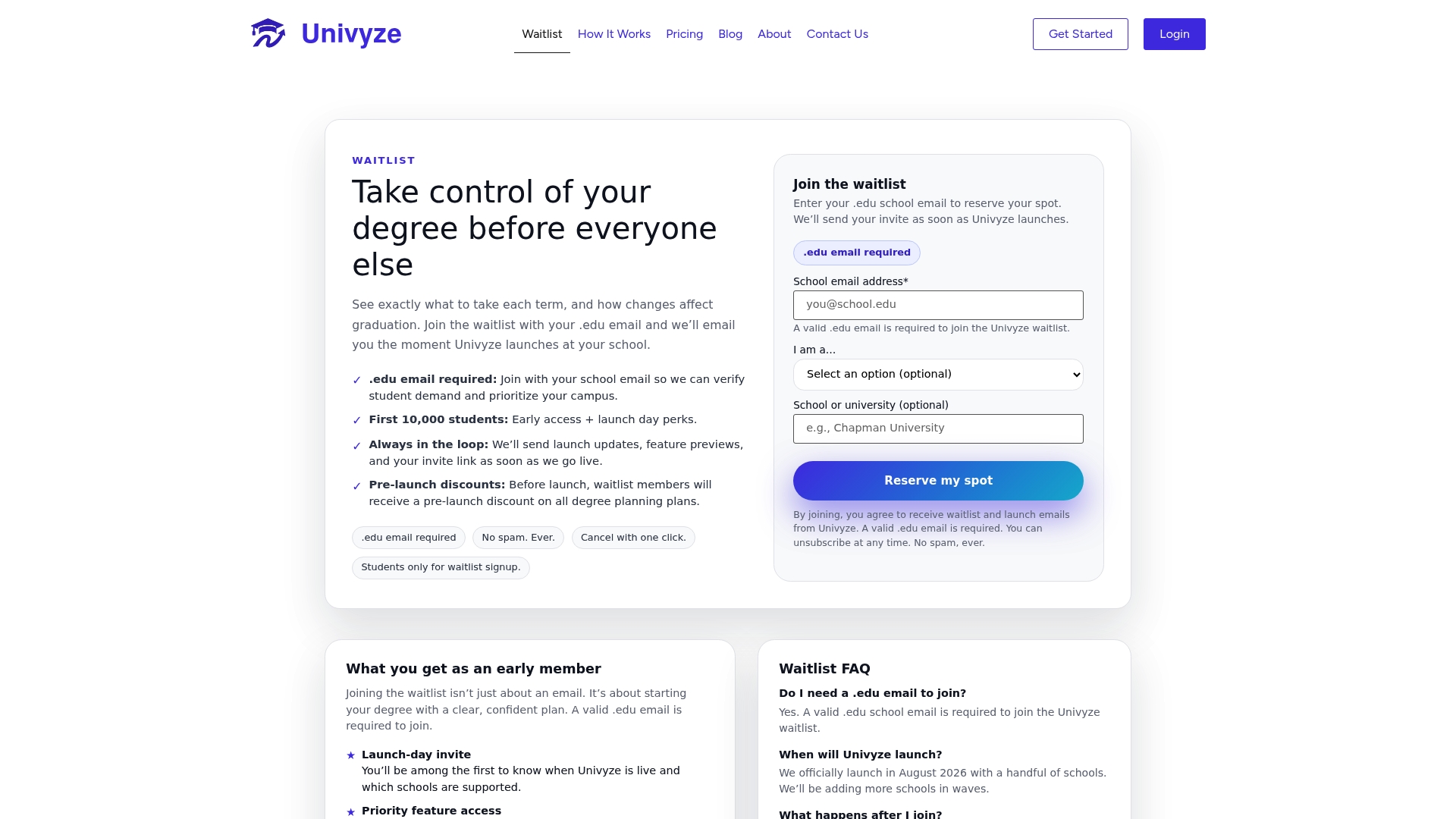
Students use Univyze to balance their workload across semesters, run what-if scenarios for major changes, and factor in AP credits, dual enrollment, and transfer credits. The result is a schedule that makes sense for your graduation timeline, not just the current term. If you want a clearer picture of your degree plan before registration opens, Univyze is worth a look. Join the Univyze waitlist and get early access to smarter planning.
FAQ
How many hours should I study per week for a heavy semester?
The standard baseline is 2–3 hours per credit hour per week. Adjust upward for difficult courses and downward for subjects where you already have strong background knowledge.
What is the best way to prioritize assignments when everything is due at once?
Use the Eisenhower Matrix to sort tasks by urgency and importance, then rank within the “important” category by grade weight. Tackle the highest-impact assignment first, not the easiest or most urgent one.
How do I recover from mid-semester burnout?
Burnout most often comes from invisible progress, not excessive workload. Switch from passive studying to active outputs like practice problems or written summaries, and track what you complete rather than how many hours you sit at your desk.
How much flex time should I build into my weekly schedule?
Reserve 3–4 hours of unscheduled time every week. This buffer absorbs longer readings, personal events, and unexpected demands without forcing you to sacrifice sleep or fall behind on coursework.
Does the Pomodoro Technique actually work for college students?
Yes. The Pomodoro Technique uses 25-minute focused sprints followed by short breaks, which sustains concentration during long study sessions and reduces the mental fatigue that builds up during a heavy semester.